

Your kid, sibling, or best friend just secured their place at university. Results day happened. The room in halls is booked. Now everyone's googling "back to uni gifts UK" and landing on the same carousel of insulated water bottles, heated blankets, and portable phone chargers. Practical? Sure. Forgettable? Absolutely. There's another option — clothing they'll actually want to wear, that becomes part of how they introduce themselves in a new city. That's the gift guide you're about to read.
September is coming fast. University welcome weeks across the UK typically kick off in the last week of September, with Scottish institutions starting a week earlier in mid-September. Teaching follows in early October. That narrow window — the first fortnight in a new city, surrounded by strangers — is when students figure out who they want to be without the social architecture of home. What they wear during freshers week becomes a visual shorthand for personality before anyone's learned names.
So why does every gift guide point you toward an air fryer?
The Problem with "Practical" Gifts
Walk through any student halls in late September and you'll see kitchens crammed with identical mini kettles, matching food containers, the same branded water bottles in the same three colours. Practical gifts solve logistical problems. They tick boxes. They do not spark a single conversation.
The standard back-to-uni gift list — power banks, laptop stands, fairy lights, scented candles — treats university as a logistics challenge. It isn't. University is an identity project. Students are asking themselves hard questions: Who am I when I'm not defined by my school, my parents' house, my hometown? The gifts worth giving are the ones that help answer that question.
Clothing is one of the few gifts that travels. It goes to lectures, to the library, to late-night shop runs, to that first awkward flat dinner. A water bottle stays in the kitchen. A graphic hoodie walks into every room they do.
Why Wearable Art Works for Students
Current fashion analysis confirms what you probably already know: younger consumers — Gen Z specifically — are using fashion as a form of personal storytelling rather than trend conformity. Clothing choices are increasingly viewed as extensions of identity. What you wear says something about your values, your aesthetic sensibility, your willingness to stand out.
This makes wearable art a genuinely strategic gift for someone entering a new social environment. A piece with a strong visual identity does the social heavy lifting. It gives flatmates something to comment on. It signals taste without requiring an explanation.
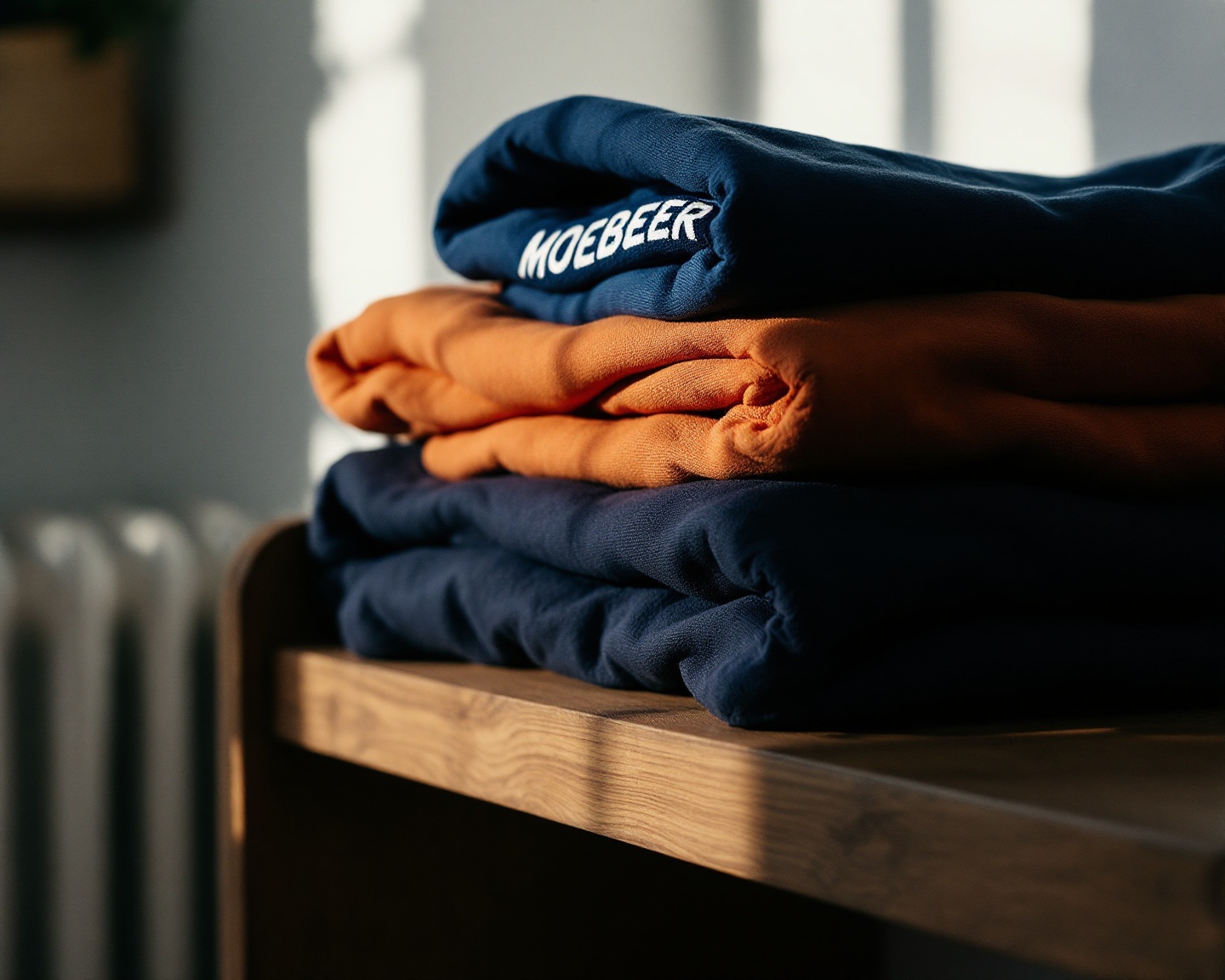
And there's a layering argument here too. Student halls are notoriously cold. The heating's controlled centrally, often set low until November, and single-glazed windows in older blocks mean draughts are standard. A 288.2 g/m² cotton-blend hoodie isn't just a statement piece — it's functional insulation. Two problems solved with one gift.
Compare that to a meditation box or a Bluetooth tracker. Useful? Possibly. Personal? Not even close.
How to Choose Wearable Art That Actually Gets Worn
The Three-Test Framework
Not all graphic clothing is created equal. Some pieces end up in the back of the wardrobe after three wears. Others become the item they reach for every single day. Here's how to tell the difference before you buy.
If a piece passes all three tests, it's a contender. If it fails one, keep looking.
What About Fast Fashion Alternatives?
You could, of course, grab a £12 hoodie from a high-street chain. It'll arrive fast. It'll look fine for a month. And then it'll pill, fade, and end up in a charity shop bag by Christmas.
Cheap upfront, low-weight fabric, generic prints, often produced under questionable conditions, falls apart after 10-15 washes. Designed to be replaced, not kept.
Higher initial cost, substantial fabric weight, original artwork, made to order (reducing waste), lasts multiple years. Designed to become a wardrobe staple.
The environmental argument matters to most students heading to university. Many shoppers in this age bracket are increasingly conscious of fashion's ecological impact. A made-to-order model — where garments are produced only after purchase — sidesteps the overproduction waste that defines fast fashion. It's not perfect, but it's structurally different.
There's also a cost-per-wear calculation. A £48 hoodie worn twice a week for two years costs roughly 46p per wear. A £12 hoodie that degrades after two months costs more per wear — and you've replaced it three times. Students understand this maths, even if they don't always articulate it.

MOEBEER Picks for Back-to-Uni 2026
These are pieces from the MOEBEER collection that fit the brief: personal, layerable, built to last, and designed to say something without shouting. Each features original calligraphy artwork as a back print, with a 3-panel hood and kangaroo pocket.

The Found Hoodie
English calligraphy back print. 65% ring-spun cotton / 35% polyester at 288.2 g/m². Regular unisex fit. For the student who's finally working out who they are.
View hoodie
The Peace Hoodie
"Peace" calligraphy back print. Same 288.2 g/m² cotton-poly blend, regular fit. A word that travels well into any room.
View hoodie
The Sabr Hoodie
Arabic calligraphy back print — "Sabr" (صبر) means patience. Ribbed cuffs, kangaroo pocket, 288.2 g/m² fabric. For the student who needs reminding that the hard parts are temporary.
View hoodie
Caffeine Update T-Shirt
Loading bar graphic print. 100% Airlume combed ring-spun cotton, side-seamed, pre-shrunk. Perfect for layering under hoodies or wearing solo during late library sessions.
View teeAll pieces ship free within the UK and are made to order — dispatched within 2-5 business days. That means ordering in mid-August gives comfortable arrival time before September move-in dates.
Timing Your Purchase
A-level results day falls on 13 August 2026. That's when placements finalise, clearing happens, and the reality of September hits. Most gift-buying activity clusters in the two weeks after results day, when families shift from "will they get in?" to "what do they need?"
Made-to-order clothing requires more lead time than same-day delivery from a warehouse. If you want a piece to arrive before move-in (which for most UK universities means mid-to-late September), order by the end of August. Earlier is better. Leaving it until the first week of September is risky.
This isn't the gift you buy last-minute at the airport. It's the one you plan.
The Case for Gifting Clothing
There's an old objection to clothing as gifts: "What if they don't like it?" Fair concern. But wearable art solves this differently than branded basics. A plain hoodie is generic. A calligraphy piece with the word "Found" or "Peace" carries intentionality — it says: I chose this because I thought about who you are and what might resonate.
That's the difference between a gift and a purchase. Purchases solve problems. Gifts communicate something. A hoodie that becomes their signature piece in halls communicates: I see you. I know you're about to reinvent yourself. Here's something to wear while you do.
That's not a water bottle.
Free UK delivery on all orders.Made to order, dispatched in 2-5 days. Browse the full MOEBEER collection.
Shop nowFrequently Asked Questions
When should I order to ensure delivery before uni move-in?
Most UK universities begin freshers week in the last week of September. Made-to-order items dispatch within 2-5 business days. For safe arrival before move-in, order by the last week of August.
What size should I choose if I'm not sure?
MOEBEER hoodies are regular unisex fit — neither slim nor oversized. When in doubt, size up. Students often prefer a slightly roomier fit for layering in cold halls.
Do you ship to Scottish universities with earlier start dates?
Yes — free UK delivery covers all addresses including Scotland. Scottish universities typically start freshers week in mid-September, so order earlier if the recipient is heading to Edinburgh, Glasgow, St Andrews, or Aberdeen.
What's the difference between the English and Arabic calligraphy hoodies?
The English calligraphy pieces (Found, Peace, Love) feature words in stylised English script. The Sabr hoodie features the Arabic word صبر (patience) in Arabic calligraphy. All share the same 288.2 g/m² fabric and construction.
Is wearable art really a better gift than practical items?
Practical items solve logistics. Wearable art helps students express identity in a new environment — which is what university is actually about. Both have value; one just gets worn every day.